Gas hot water vs electric cylinders in Tauranga: running costs, pressure and what suits your home
A practical local guide comparing gas (including Infinity systems) and electric hot water cylinders for Tauranga, Papamoa and Mount Maunganui homes — covering how each works, pressure and running-cost considerations, installation notes, and a checklist of questions to ask your gasfitter or plumber before you decide.
Quick overview: what this is and who it’s for
This article is for Tauranga, Papamoa and Mount Maunganui homeowners trying to decide between keeping or replacing an electric cylinder and going with a gas hot water solution such as an Infinity (continuous-flow) system. I’ll keep it practical — how each system works, what affects running costs and pressure, installation implications for local homes (including rural properties on septic), and the specific questions to ask your plumber or gasfitter before you commit.
Electric cylinders — the familiar option
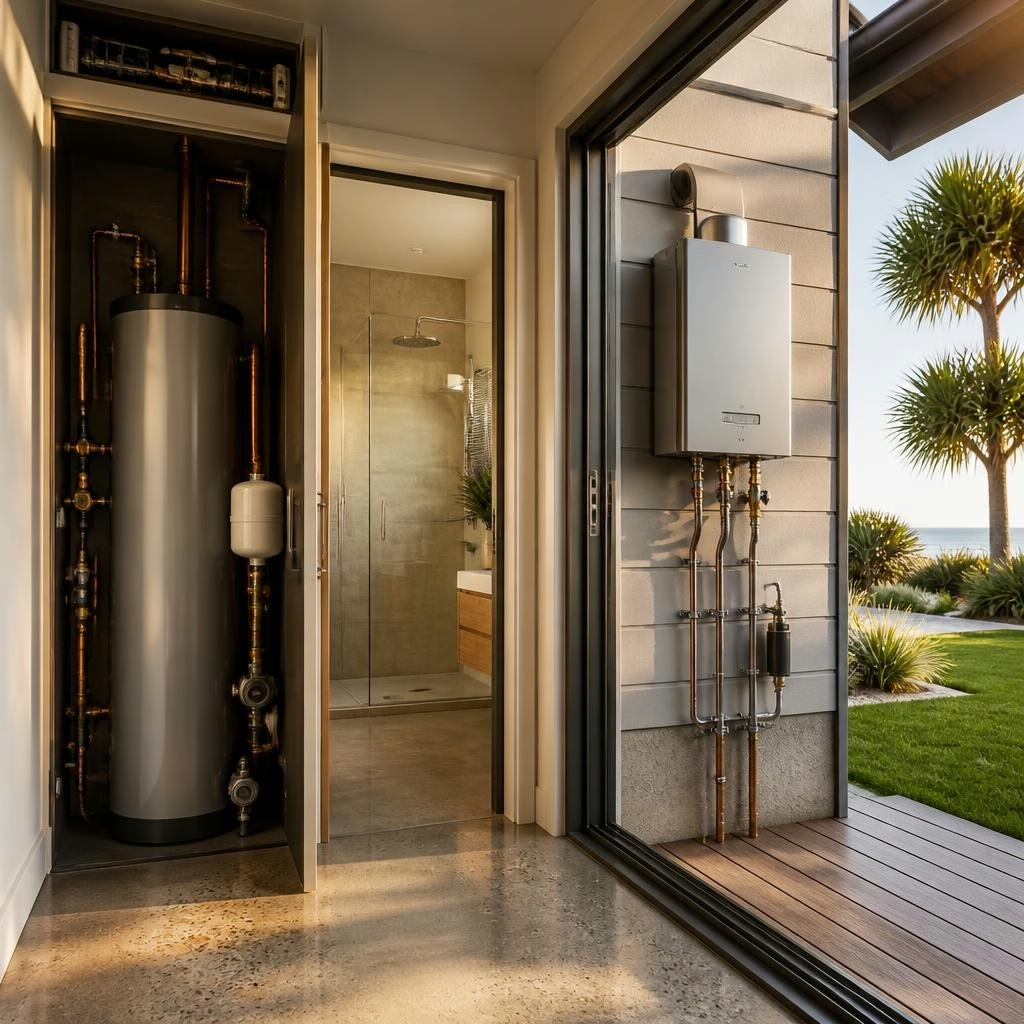
Electric cylinders store hot water in a tank and heat it with one or more elements. Pros are simplicity, straightforward maintenance and compatibility with existing electrical supply and off-peak tariffs where available. Downsides are heat loss from the tank (even a well-insulated cylinder loses some energy), larger footprint in a laundry or cupboard, and the risk of running out of stored hot water during heavy simultaneous use unless the cylinder is sized up. For many Tauranga homes on mains water and predictable usage patterns, an electric cylinder is low-fuss and reliable.
Infinity and gas hot water — how they differ
Infinity (continuous-flow) gas systems heat water on demand, so there’s no storage tank and effectively no standby heat loss. That usually means a smaller footprint and an endless supply for back-to-back showers. The trade-offs are: they need a sufficient gas supply and proper venting, higher upfront install complexity, and regular servicing. Local customers have had smooth swaps from failing cylinders to Infinity systems and noted fast, tidy installs — but those experiences depend on the home's existing gas infrastructure and the installer’s approach.
Running costs — the practical factors, not hard numbers
There’s no universal answer for which is cheaper — it comes down to your usage pattern, current electricity and gas prices, and system efficiency. Key variables: how many people shower and when, whether you have off-peak electricity, how well your cylinder is insulated, and the efficiency rating of a new gas unit. If your household uses lots of hot water at once (multiple showers or big baths), continuous-flow can be more efficient because you’re not reheating a big tank. If you rarely use hot water or have cheap off-peak power, an electric cylinder can be economical. Ask your plumber to model likely fuel use for your household rather than trusting a blanket rule.
Pressure and flow — what to expect in real homes
Shower pressure isn’t just about the hot water heater — it’s about your mains pressure, pipe sizing, and any pressure-limiting devices. A hot water cylinder supplies stored volume and can deliver strong flow to multiple outlets if the mains pressure is adequate; an Infinity unit can maintain temperature under continuous flow but still depends on mains supply for pressure. If you’ve got weak mains pressure, neither system will magically fix it — you might need a pump or a mains upgrade. Always have your plumber check incoming pressure and pipework before deciding.
Installation implications in Tauranga and rural Bay of Plenty properties
In town sections in Tauranga or Mount Maunganui the main considerations are available gas connection, venting for the unit, and room for flues or cylinders. On rural properties — especially those on septic systems — think about access for removal of old cylinders, where flues will sit relative to tanks and effluent systems, and whether you need trenching or new water mains work. JT Plumbing’s work in the region shows these practical details matter: tidy site management, dealing with warranty parts, and coordinating replacements are part of a smooth install. If your property has a septic tank, flag that to your plumber early so they can plan excavation or access without risking the system.
When it makes sense to upgrade
Consider an upgrade if your cylinder is old and inefficient, if you frequently run out of hot water, or if you’re renovating and want to save space. A swap to Infinity is sensible where there’s reliable gas supply and you want continuous hot water for multiple users. Staying with or upgrading an electric cylinder makes sense if you rely on off-peak power, have limited gas access, or prefer the simplicity of a tank. Whatever you choose, get an installer to assess your real hot-water demand and constraints — measure showers, note peak times, and review piping and supply.
Checklist: questions to ask your local gasfitter or plumber
Before you commit, ask your plumber/gasfitter these straight-up questions: 1) What’s my house’s measured mains water pressure and flow? 2) Do I have adequate gas supply and meter capacity for an Infinity unit? 3) Where will the flue go and will that affect my site or septic setup? 4) What ongoing servicing is required and how often? 5) What warranties apply to the unit and the installation, and who deals with manufacturer claims? 6) What are the expected running-cost differences for my household’s usage pattern? 7) Will the install require trenching, new pipework, or council consent? 8) Can you show previous local installs or references for similar jobs? Bring recent power bills and tell them about any septic tanks or rural access issues so they can give realistic advice.
Article by
JT Plumbing Drainage & Gas
JT Plumbing Drainage & Gas has over 18 years’ experience providing plumbing and drainage services to over 5,000 clients and 2,000 new homes in Tauranga. Located in Tauriko, Tauranga, we use the latest technology, systems and processes to make sure you receive a responsive plumbing service that saves you money, time and hassle. By choosing JT Plumbing you can be confident that you’re plumbing project will be managed by a team of experienced, qualified plumbers, drainlayers and gasfitters. Our work is covered by the Master Plumbers and our gold standard guarantee. We work to be a force for good by being a great employer, minimising our environmental impact and maximising our contribution to the well being of the wider Tauranga Community.