Rainwater tanks in Tauranga: sizing, council basics and plumbing into your home
A practical, no-nonsense guide for Tauranga, Papamoa and Mount homeowners on choosing the right rainwater tank, what your roof and gutters need, council checks to do, and the plumbing differences between garden use and supplying toilets or washers.
Quick local overview
If you live in Tauranga, Papamoa or Mount Maunganui and you’re thinking about a rainwater tank, this is the practical rundown you need. JT Plumbing Drainage & Gas have been installing tanks and handling related plumbing work locally, and customers frequently mention fast, effective installs when they needed them urgently. Read on for size tips, what to check on your roof and gutters, council stuff to sort out, and the main plumbing differences between using tank water for the garden and for toilets/washing machines.
Why install a tank here?
We get dry stretches and peak summer demand in the Bay of Plenty — a rain tank lowers mains use, helps with garden watering, and can give you backup during supply interruptions. For rural properties a tank can reduce dependence on water deliveries. Don’t treat a tank as a complete replacement for mains: it’s about reducing use and adding resilience, not avoiding your water supplier entirely.
How to size a tank (the basics)
Tank size comes down to two things: how much roof you can catch rain from and how much water you want to store. Look at your roof catchment area (square metres) and think about intended use: garden only needs less storage than households that want to feed toilets or washing machines. For planning: estimate your weekly usage for the intended fixtures, then match that against likely rainfall and roof area. If you’re unsure, get a plumber to measure the catchment and run ballpark numbers — it beats buying a half‑useful tank.
Roof and gutter requirements
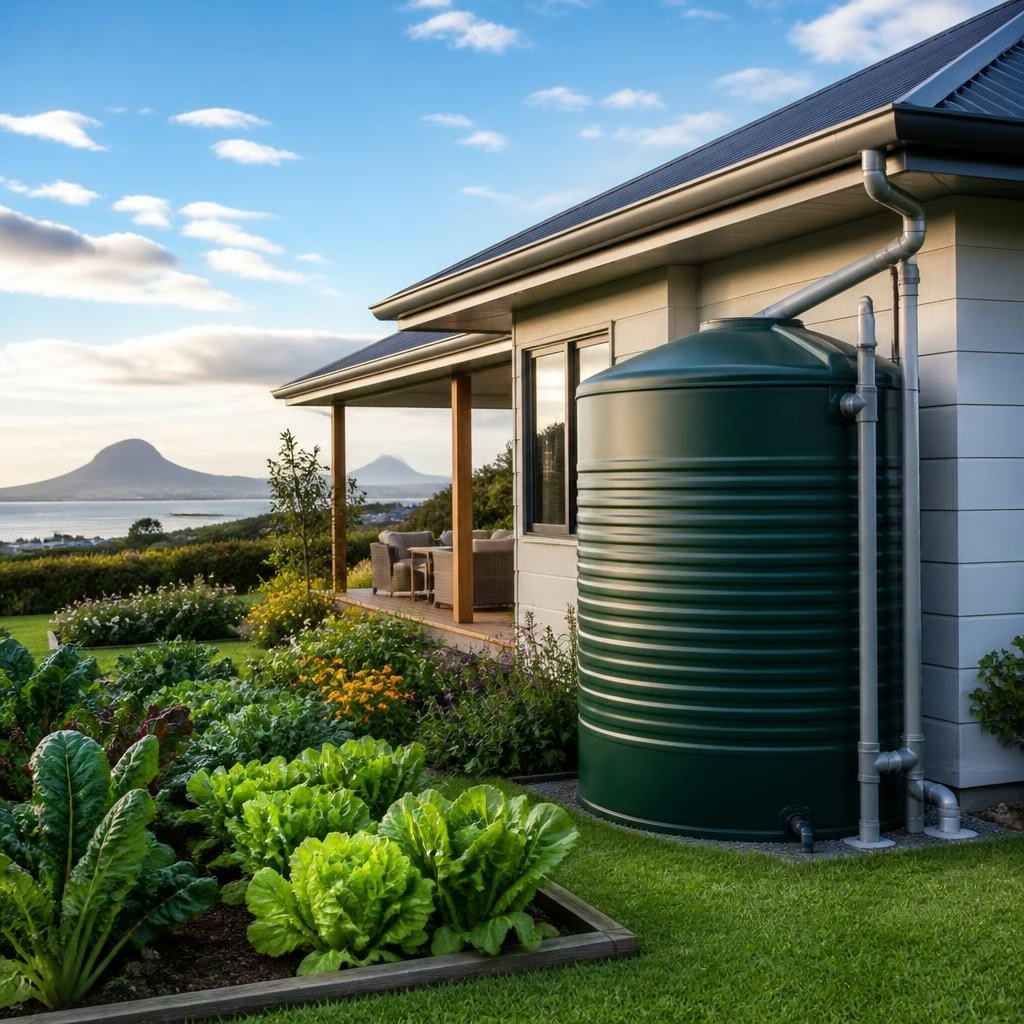
Good catchment starts with a tidy roof and gutters. Make sure gutters are clean, downpipes are in good shape and flashings don’t leak into the system. You’ll want a first‑flush diverter or similar device to keep the first run of dirty water out of the tank, and leaf guards/mesh on inlets where necessary. Also check roof material suitability for non‑potable collection (some roofs shed contaminants more than others) and ensure downpipe size matches the tank inlet — a plumber will confirm that on site.
Garden use vs supplying toilets and washers
Garden-only supply is the simplest route: gravity-fed header tank or direct outlet for hoses, basic filtration and clear non‑potable labelling. Supplying toilets and washing machines is a different job — you’ll usually need a pump/pressure system, adequate filtration and a certified backflow prevention device to protect the household mains. That increases complexity and cost and typically requires a qualified plumber to install and certify the work. Decide your end uses before ordering a tank so the system is designed correctly from the start.
Council basics and compliance in the Bay of Plenty
Local councils have rules around plumbing connections, backflow prevention, and when building consent or plumbing certification is required. Tauranga City Council (and neighbouring district councils) handle consents and have specific expectations for work that ties into household water systems. Don’t assume garden-only is always consent-free — check with council or get a plumber to advise. JT Plumbing works with qualified, experienced plumbers who can point out likely consent needs and help you meet the requirements.
Timing, installation day and a note for septic properties
Avoid the last-minute rush before summer. Order tanks and book installation well ahead — lead times and site prep can add days. On install day expect a tidy crew to check roof connections, locate the tank for access and pump run, and test pumps/valves. If your property uses a septic tank, be clear: rainwater storage doesn’t treat wastewater. Toilets and washers still send grey/black water to the septic system, so discuss siting and any impact on effluent flows with your plumber. A quick word of practical reassurance: one local customer said they needed an urgent tank and the team turned up and completed the job quickly and to a high standard — that sort of prompt, tidy work is what to look for when booking an installer.
Customer review


Article by
JT Plumbing Drainage & Gas
JT Plumbing Drainage & Gas has over 18 years’ experience providing plumbing and drainage services to over 5,000 clients and 2,000 new homes in Tauranga. Located in Tauriko, Tauranga, we use the latest technology, systems and processes to make sure you receive a responsive plumbing service that saves you money, time and hassle. By choosing JT Plumbing you can be confident that you’re plumbing project will be managed by a team of experienced, qualified plumbers, drainlayers and gasfitters. Our work is covered by the Master Plumbers and our gold standard guarantee. We work to be a force for good by being a great employer, minimising our environmental impact and maximising our contribution to the well being of the wider Tauranga Community.